
The problem with being paid to do what you love
on following your passion, and what follows that

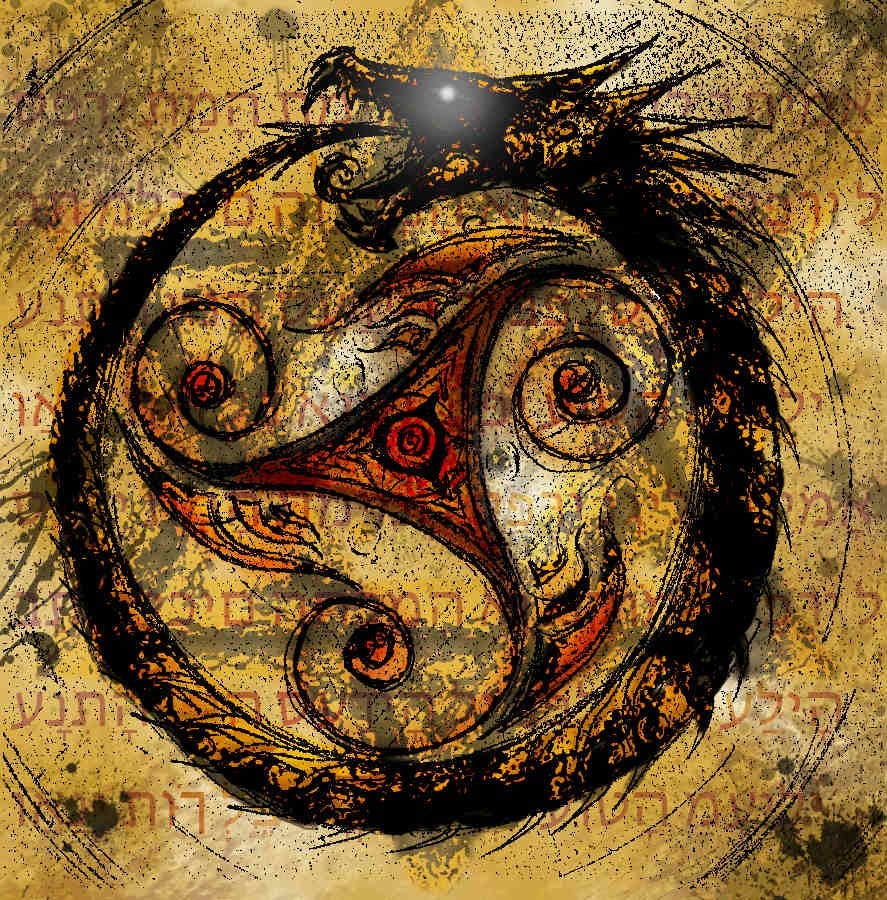
Friedrich Kekulé, a German chemist in the 19th century, revolutionized organic chemistry by proposing a cyclical structure for benzene and other aromatic compounds. While working on the problem, he dozed off in front of a fire and saw atoms dancing, chains of them twisting like snakes, until one bit its own tail and whirled, mocking him. He woke and went immediately to work. By morning he had the structure of benzene.
It is the deepest form of worship I can imagine — to love a question so completely that it finds you in your dreams.
I have been thinking about that snake eating its own tail. The thing that completes itself. That needs no reason outside its own motion.
Years ago, I met a nuclear physicist near retirement — decades spent in research and administrating atomic power plants. He looked like a scientist: Einstein-esque salt and pepper hair, dark unruly brows, a look of perpetual annoyance etched into his features.
He seemed willing to talk about his work, but it turned out to be mostly a vent. Power struggles, nepotism, politics. A decades-long rivalry that ended with him deciding to retire early rather than report to a man he had come to hate.
He didn’t mention atoms, or fission, or voltage. The science had disappeared from his account of a scientific life.
So I asked what drew him to the field. His voice softened. He talked about a childhood spent reading about scientists and their discoveries, about being adamant — against the advice of mentors — about studying nuclear physics. The years of preparation before he qualified for his first job.
I asked if he wished he had stayed in research. Done what he dreamed of as a child.
A flicker crossed his face. Surprise, and something that looked a little like hurt.
That was just a childish dream. There is no money in research.
He had given forty years to science. But before the forty years was something else: a child feeling a specific pull he didn’t yet have words for. That pull is its own kind of knowing. It precedes credential and justification.
Somewhere down the line, it was lost. It is the tragedy of countless careers.
Mine too.
When I first joined the company that I recently quit, I was ecstatic. It was a place well known for its great culture. The work and the people genuinely excited me. I came in with high expectations. Those first few years exceeded those expectations.
I loved my job. I don’t mean that I never got tired or bored, or never had to deal with people I didn’t like. There were plenty of shitty clients, pointless presentations and other corporate bullshit. What I mean is that I felt connected to what I did.
The cynical part of me says that I drank the KoolAid. I was a staunch supporter of the products we built. My manager was the best leader by far I have ever worked for. I was surrounded by interesting and genuine people who felt the same way. The place was cool and fun in a way I couldn’t have imagined in a workplace.
But it was the mission of the teams I worked with that inspired me — connecting people to achieve a common goal. It was what called me to work there, what sustained me through rough times. I was proud of what we were doing. I was proud of my contribution to such a monumental mission.
This job shaped my personality. It expanded what I notice about the world and how I inhabit it. It is where I learned to trust myself and persuade others to trust me. I learned how to lead without a title. To listen to the flow of power and read the subtext in a room.
Years passed and times changed. Like many other tech companies, this one too was recently affected by volatility and challenges. But the morale came down long before the stocks did.
At first I thought it was the pandemic. Instead of blunting my ambition, the growing apathy around me fueled me. I scrambled up the ladder, determined to be the change. In the control room, I got to watch up close how something beautiful and full of life dies, rotting slowly from within.
I was finally in the rooms where decisions were made. Every decision was a trade-off. The people in these rooms were accomplished and careful. They cared about the business, and they also genuinely cared about the people. What I learned, watching them trying to reconcile the dissonance of doing right by both, was this. Caring is not enough when the system you are operating inside has its own logic.
Profitability edged out culture. Efficiency edged out trust. Creativity was valued less than obedience. Curiosity became an inconvenience. There was more secrecy, less honesty. More power, less inclusitivity. People left. People were let go.
Every rationale was reasonable. That was the most disorienting part — how reasonable it all was, and how the cumulative effect of all those reasonable decisions was something that felt, from the inside, like suffocation.
For a minute, I was fierce about fighting to preserve what I once loved. But I fell in line from the pressure soon enough.
I became part of the problem.
I wrist-slapped innovation. I over-architected cumbersome processes. I submitted poor performance reviews to people who were excellent and couldn’t toe the line, which amounts to the same thing in a bureaucracy. I stayed silent when people were ridiculed for their differences.
I did my job.
Near the end, my manager told me I seemed checked out. People noticed. I was already planning to leave. The money was good, the benefits excellent, the LinkedIn profile impressive. They were reasons to stay. That was precisely the problem.
When the stocks crashed along with the culture, I told myself the story I needed: hat I was leaving a place that had changed beyond recognition. And that was true. But it was not the whole truth.
I had changed too.
My primary motive for joining this company had not been money. It was a deliberate departure from the way I had made decisions before. By an accident of great timing, it turned out to be the most financially significant job I ever had. The money changed my life in real and lasting ways.
The pride I once felt in the mission had grown abstract. The pride I felt in my compensation slip felt concrete, measurable, mine. The shift had happened quietly, over years, and I hadn't noticed it because it felt like success. Because it was success — exactly what they promised would happen if I followed my heart.
What they didn’t mention was that success, once it arrives, starts doing its own work on the heart.
There is a name for what happened to me, to the scientist, and very likely, to you.
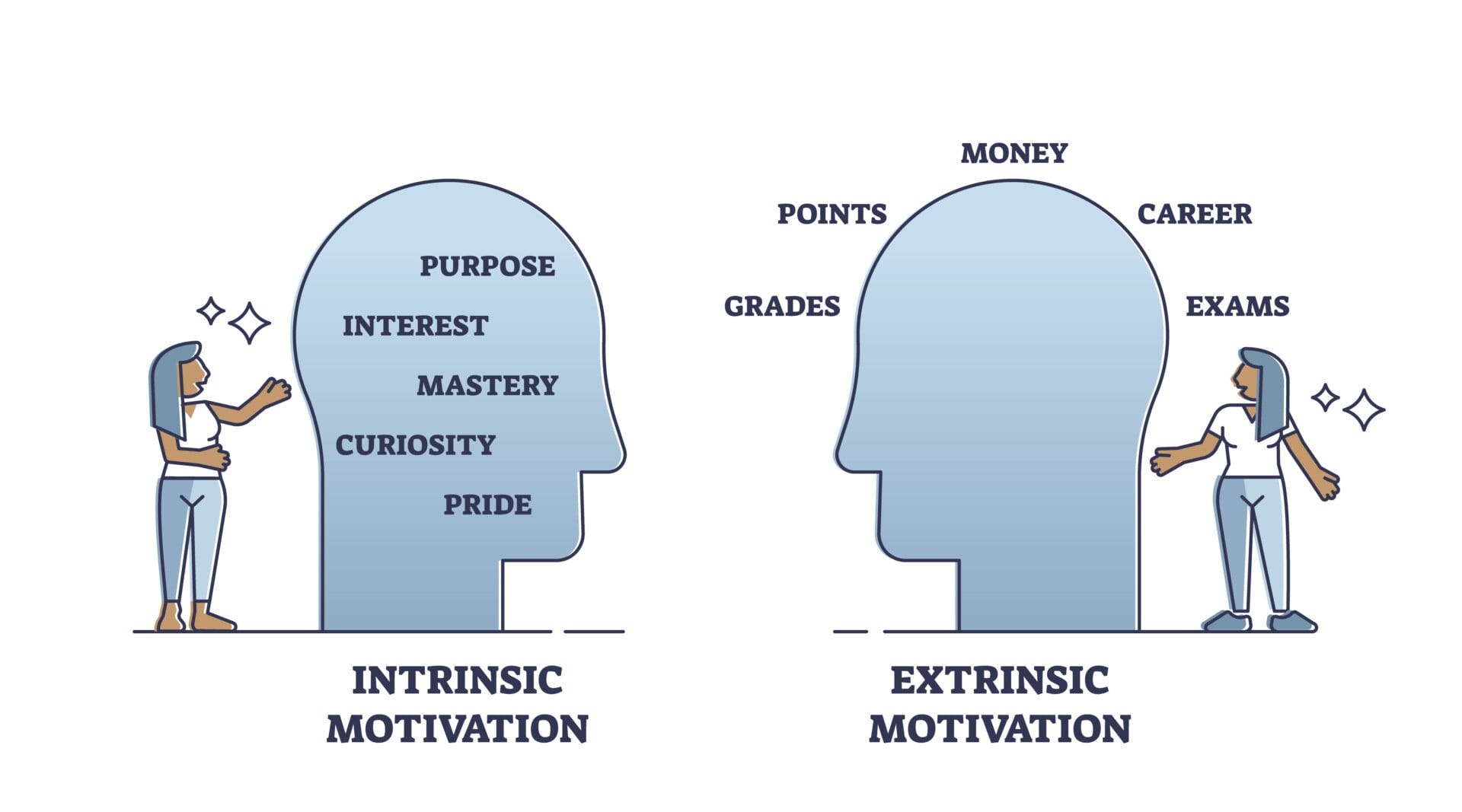
The over-justification effect. The phenomenon by which an external reward for an intrinsically motivated behavior erodes the intrinsic motivation itself. It sounds clinical because it is clinical — it has been documented on children, artists, athletes, scientists. It is not a personality flaw. It does not require weakness or greed or bad faith. It requires only that you be consistently rewarded for something you once did for its own sake.
We are told to follow our passions. To monetize what we love. To turn the personal into the professional. We are given frameworks that promise convergence — do what you love and the reward will follow. What an incomplete sentence that turns out to be.
The reward, once it follows, may change the nature of the following.
I have never been able to let go of the notion that one must love what one does for a living. The idea of spending the largest portion of my waking life on autopilot — doing what I have to, with indifference or resentment — feels horrifying.
What I want to build now is harder to explain than what I want to leave behind. Still formless, still more feeling than blueprint. A space where people can remember how to be themselves. Not perform. Not optimize. Just be, in the presence of others who are trying to do the same. But I do know that it is an embodiment of the inescapable sensations of my own wanting, my own longing. I am figuring out what it looks like in the world outside my head and my heart — a retreat, a workshop, a circle. But the impulse is this: to create a container where it is safe to put down the reasons and just be what is underneath.
That is what I want to tend. This is what drives me right now. What if I fail? What if it all comes to nothing? The question haunts me. I have learned not to deny it or hide from it, but to accept it as a possibility.
But there is another, stranger fear underneath that one. What if I succeed? What if what I build finds an audience? What if it makes money? What if I become known for it?
What if the succeeding helps people recover their wanting, while slowly, in the building of it, I lose my own.
The over-justification effect does not make exceptions for people who have read about it. It does not care that I left a good salary to avoid exactly this. It is patient. It waits for the moment the reward arrives — the full retreat, the glowing testimonials, the income that finally makes this feel legitimate — and then it begins its work.
I am watching it happen in miniature, right here on Substack. Writing this to you. There is a version of this newsletter that I tend the way I tend a question — because something in me will not leave it alone, because the particular shape of my inner world needs an outside to press against. And then there is a version where I check how many people opened the last one. Where I notice which sentences got shared. Where I begin, almost without meaning to, to write toward the metrics rather than toward the feeling that made me want to write at all.
Here is where I am practicing the return back to the pull. Back to the thing I was trying to say before I started wondering how it would land. The views and the subscriber count stays open in another tab. I am learning to look at it the way you look at a clock when you are doing something you love — occasionally, and with mild surprise that time still exists.
Because the mechanism requires that you trust the external validation more than your own experience of wanting. The reward overwrites the intrinsic signal only when you have already begun to distrust that signal — when the inner voice has grown quiet enough that the outer voice drowns it out.
This is not a personality flaw. It is what we were taught.
My daughter wakes up every morning in what I can only describe as astonishment — that the world is still there, that there are things to touch and taste and climb. She wakes up wanting to switch on the lights, wanting to taste watermelon, wanting to climb the railing. She wants and wants and wants, and moves toward what calls her with her whole body, the way water finds a slope.
She will one day be asked to justify her wanting. She will learn that desire without a destination is self-indulgence. She will learn what we have learnt. To wait for permission — from institutions, from markets, from the approval of others — before we allow ourselves to move toward the things that move us.
I don’t think this is recoverable in a single decision. I don’t think you quit your job and wake up the next morning with your wanting intact. I think it is slower than that and more deliberate — a practice of returning, again and again, to the question of what you would do if no one was watching. What you would reach for if there were no reward waiting. Not as a fantasy, but as a compass.
I have no idea how to actually do this – stay connected to my wanting. I am making it up as I go. I am documenting the journey on Substack. I am slowing down, deliberately, guarding myself against compulsive schedule-making and rushing to meet punishing self-imposed deadlines. I am letting my mind wander. I am dreaming. I dream until I am bursting with the need to act on my wanting. And then I let that need drive me.
I worry sometimes that I am naive, or worse, entitled. The circumstances that made this leap possible are incredibly fortunate — a STEM family, good timing, the option to relocate to India, the benefits of geo-arbitrage without the machinery of immigration. I know I am privileged to be able to even consider building a career in something I feel deeply about.
This is why my new venture carries more weight for me than a new career. It is a wager. Not just on whether I can build something people want, but on whether I can build something people want and still want it myself. To find out whether it is possible to hold your livelihood and your longing in the same hands without one crushing the other. Whether sustenance and meaning can be the same motion, or whether they always end up, over time, in competition. I keep returning to Kekulé’s snake. A thing that feeds on its own energy. No gap between the motion and the meaning. No outside required to justify the turning. That is what I am trying to build. That is what I am trying to be.
Your desire is data. The oldest data you have. It has been there longer than your resume, longer than your doubts, longer than anyone’s opinion of what you should do with it. It is the most reliable information you have about who you are.
Tend it accordingly.
I needed to read this. The timing couldn't have been perfect.
I too quit corporate
I started writing
I also decided to make money from it
And now I am doing neither - writing or making money.
Still grappling with what's more important. I havent found an answer yet. It was nice to read about what you thought of it.
This is coincidental timing. I found myself yesterday talking with a random lady. We were both volunteering at the same place. I mentioned I hadn’t seen her name before and she said that she had recently joined. She then detailed all the events in her life that brought her here.-to this physical location but more so to this place mentally. I listened, responded to her by validating and sharing my own experience. But as I spoke, I was a bit surprised at what I was saying. It was all true, it was very recent though and I hadn’t really processed it yet. It was this same topic around following passion and leaving behind “other stuff”. A job, people, things that don’t align. It hadn’t occurred to me that the monetization and “success” tainted the journey. That’s a slightly new lens on the conversation we had. I don’t have a point. Just that this resonated.